Advanced treatment
Stem Cell Transplant
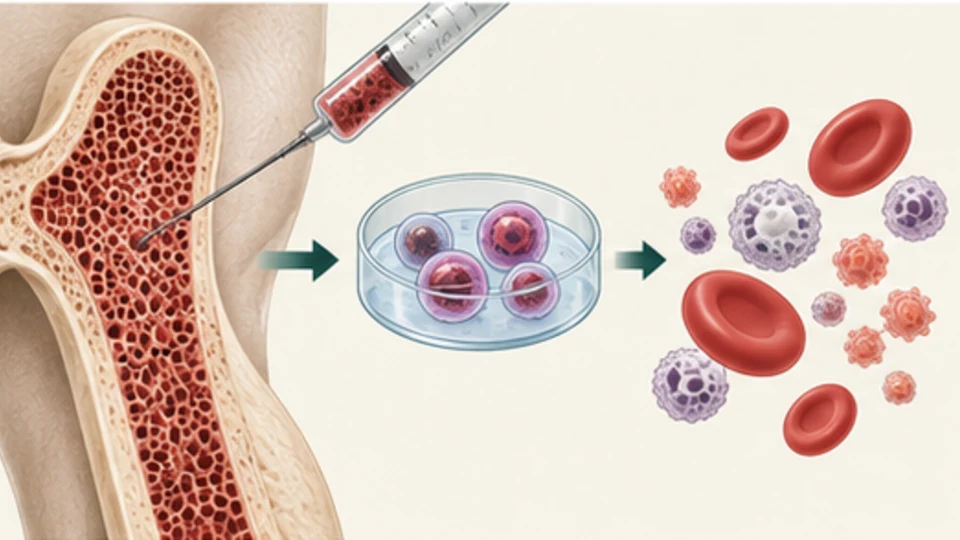
Infusion of haematopoietic stem cells after high-dose treatment or as part of recovery, to restore blood production.
Not a diagnosis and not final medical advice. Must be reviewed by a doctor.
What is it?
Transplants can be autologous using the patient's own cells or allogenic using donor cells.
In multiple myeloma, autologous transplantation is often discussed as part of the plan in patients who meet the criteria.
All transplants require feasibility assessment and long-term monitoring.
Stem cells are collected from the blood or bone marrow, stored, and then returned after certain therapies to restore the blood system.
How it works
Stem cells are collected from the blood or bone marrow, stored, and then returned after certain therapies to restore the blood system.
Position in the treatment pathway: Generally considered in responsive disease with adequate risk, often after several cycles of initial therapy.
Which cancers is it usually discussed for?
Multiple Myeloma
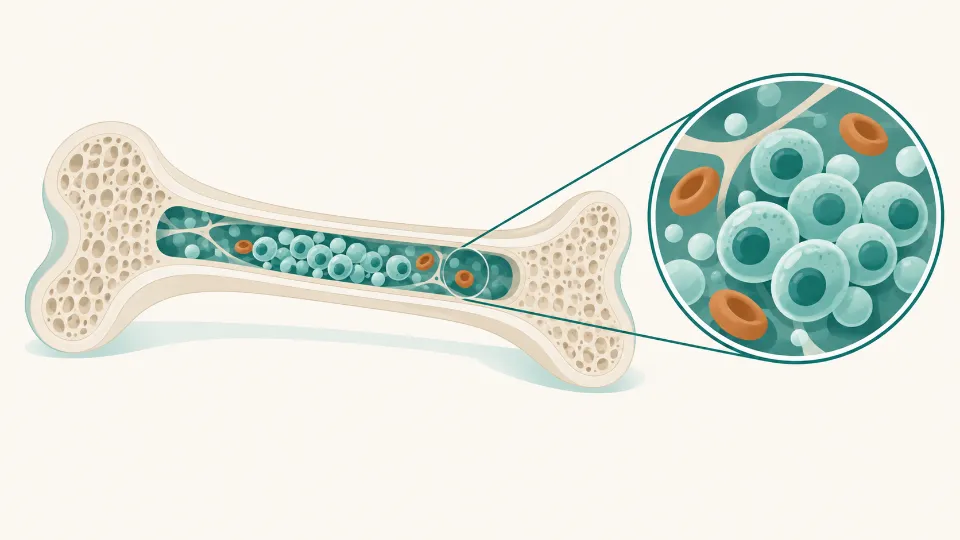
Multiple myeloma is a malignancy of plasma cells in the bone marrow, with cytogenetic markers that matter when treatment strategy is considered.
Open cancer page
Lymphoma
Lymphoma is a malignancy of the lymphatic system with many subtypes, and accurate pathological classification determines the direction of treatment.
Open cancer page
Usually considered
- Diseases that are under control.
- Organ condition and age in accordance with facility policy.
- Donor availability if the type of transplant requires it.
Usually not a candidate
- Inadequate organ condition.
- Uncontrolled disease despite optimal therapy.
What is the process like?
Preparation 1
Stem cell collection.
Preparation 2
Organ evaluation.
Preparation 3
Infection prevention planning.
Monitoring
Monitoring blood cell recovery.
All preparation
- Stem cell collection.
- Organ evaluation.
- Infection prevention planning.
All monitoring
- Monitoring blood cell recovery.
- Monitor for infection and long-term complications.
Risks and points to watch
Side-effect notes, not a complete list
- Risk of infection and decreased blood cells during the recovery period.
- In allogeneic transplantation, the risk of immune reactions between the donor and recipient.
- Long-term effects require regular monitoring.
What needs to be checked?

Bone marrow biopsy and aspiration
Collection of bone marrow to assess plasma cells and blood production.
View test
Multiple myeloma FISH panel
A cytogenetic test to detect chromosome changes linked to risk in multiple myeloma.
View test
Echocardiography
A heart ultrasound used to assess pumping function before and during certain therapies.
View test
Blood laboratory tests
Routine blood tests to assess general condition, organ function, and selected markers.
View testDel(17p) / TP53
This examination looks for changes in chromosomes and genes related to how cells repair damage.
View biomarker
Cost and access
Cost figures depend heavily on location, facility and payer. We do not show estimated figures on this page; what can be prepared first are the questions.
Lenalidomide
Immunomodulator
- Availability may vary between health facilities and changes over time.
- Funding pathway (insurance, patient access program, or self-directed) needs to be confirmed.
- Prices are not listed because they cannot be verified responsibly.
Bortezomib
Proteasome inhibitor
- Availability may vary between health facilities and changes over time.
- Funding pathway (insurance, patient access program, or self-directed) needs to be confirmed.
- Prices are not listed because they cannot be verified responsibly.
Daratumumab
Anti-CD38 monoclonal antibody
- Availability may vary between health facilities and changes over time.
- Funding pathway (insurance, patient access program, or self-directed) needs to be confirmed.
- Prices are not listed because they cannot be verified responsibly.
Providers and clinical trials
Access status not yet verified
NCT06904066Phase 1CAR-T cell therapy
Autologous T Cells Transduced With Retroviral Vectors Expressing TCRs for Participant-specific Neoantigens in Patients With Hematologic Malignancies
Lymphoma, Multiple Myeloma | CAR-T cell therapy, Stem cell transplant, Chemotherapy
United States1 registry sites
Why this appears: Appears because it is recorded for Lymphoma, the treatment category is CAR-T cell therapy.
What to verify: Acceptance of patients from outside the local country has not been verified.
- Registry
- Recruiting in registry
- Site
- Not verified
- International access
- Unknown
- Patient match
- Not assessed
Last checked 16 Oktober 2026Source ClinicalTrials.govNCT06904066Not verified
NCT07509034Phase 1CAR-T cell therapy
Autologous B7-H3 Chimeric Antigen Receptor T Cells in Previously Treated Extensive-Stage Small Cell Lung Cancer With Recurrent or Refractory Disease
Lung Cancer | CAR-T cell therapy, Stem cell transplant, Chemotherapy
United States1 registry sites
Why this appears: Appears because it is recorded for Lung Cancer, the treatment category is CAR-T cell therapy.
What to verify: Acceptance of patients from outside the local country has not been verified.
- Registry
- Recruiting in registry
- Site
- Not verified
- International access
- Unknown
- Patient match
- Not assessed
Last checked 16 Oktober 2026Source ClinicalTrials.govNCT07509034Not verified
NCT07681596Phase 1 / Phase 2CAR-T cell therapy
A Modular, Phase I/II, Multicentre Study to Evaluate AZD4045, in Participants With Relapsed or Refractory Multiple Myeloma
Multiple Myeloma | CAR-T cell therapy, Immunotherapy, Stem cell transplant
United States, Australia12 registry sites
Why this appears: Appears because it is recorded for Multiple Myeloma, the treatment category is CAR-T cell therapy.
What to verify: Acceptance of patients from outside the local country has not been verified.
- Registry
- Recruiting in registry
- Site
- Not verified
- International access
- Unknown
- Patient match
- Not assessed
Last checked 16 Oktober 2026Source ClinicalTrials.govNCT07681596Not verified
NCT06182774Phase 3Immunotherapy
Fixed Duration vs Continuous Anti-CD38 Antibody Therapy Among Transplant Ineligible Older Adults With Newly-Diagnosed Multiple Myeloma
Multiple Myeloma | Immunotherapy, Stem cell transplant
Canada31 registry sites
Why this appears: Appears because it is recorded for Multiple Myeloma, the treatment category is Immunotherapy.
What to verify: Acceptance of patients from outside the local country has not been verified.
- Registry
- Recruiting in registry
- Site
- Not verified
- International access
- Unknown
- Patient match
- Not assessed
Last checked 16 Oktober 2026Source ClinicalTrials.govNCT06182774Not verified
NCT07594067Phase 1Combination regimen
TCR1188-ABC Cells in KRAS-mutated Cancers
Lung Cancer | biomarker: KRAS | Stem cell transplant, Chemotherapy
United States1 registry sites
Why this appears: Appears because it is recorded for Lung Cancer, it mentions marker KRAS, the treatment category is Stem cell transplant.
What to verify: Acceptance of patients from outside the local country has not been verified.
- Registry
- Recruiting in registry
- Site
- Not verified
- International access
- Unknown
- Patient match
- Not assessed
Last checked 16 Oktober 2026Source ClinicalTrials.govNCT07594067Not verified
NCT00106925Not listedCombination regimen
Long-term Evaluation and Follow-up Care of Patients Treated With Stem Cell Transplants
Multiple Myeloma | Stem cell transplant
United States1 registry sites
Why this appears: Appears because it is recorded for Multiple Myeloma, the treatment category is Stem cell transplant.
What to verify: Acceptance of patients from outside the local country has not been verified.
- Registry
- Recruiting in registry
- Site
- Not verified
- International access
- Unknown
- Patient match
- Not assessed
Last checked 16 Oktober 2026Source ClinicalTrials.govNCT00106925Not verified
Questions for the doctor
- What is autologous or allogenic transplantation, and why?
- What eligibility requirements must be met?
- What is the long-term monitoring plan?
Sources
- NCI Dictionary of Cancer Terms(lembaga)
Is Stem Cell Transplant relevant for my case?
Ask for an initial review. We will explain which documents and markers need to be completed before discussion with a doctor.
Upload reports
Photos or PDFs of pathology, biomarkers, imaging and treatment history.
Case structured
Documents are turned into a structured case summary.
Navigator review
A human navigator checks completeness before anything is shared.
Provider review
With your consent, the case is discussed with providers for assessment and a written quote.
Is Stem Cell Transplant relevant for my case?
Ask for an initial review. We will explain which documents and markers need to be completed before discussion with a doctor.
After submission, a human navigator reviews your request and contacts you through your chosen channel. The WhatsApp message already includes this page context, so you do not need to explain from the beginning.
Clinical data is not requested in the form and is not sent to analytics. Do not send medical reports through WhatsApp or email; use the secure upload page. We do not promise eligibility or any treatment outcome.
You just read about Stem Cell Transplant. Next:


Next steps
These suggestions come from links between entries in TanyaKanker's database, not from a medical judgement. Each suggestion includes why it appears.
Next to learn
- Del(17p) / TP53
Biomarker
Reason: Related through a biomarker
- Bortezomib
Drug
Reason: Uses this drug
- Daratumumab
Drug
Reason: Uses this drug
- hematologi
Service
Reason: Related to this page
- Relapsed DLBCL: when CAR-T starts being discussed
Guide
Reason: Related to this page
- Lenalidomide
Drug
Reason: Uses this drug
To check
- Bone marrow biopsy and aspiration
Diagnostic test
Reason: Memerlukan pemeriksaan
- Echocardiography
Diagnostic test
Reason: Memerlukan pemeriksaan
- Multiple myeloma FISH panel
Diagnostic test
Reason: Memerlukan pemeriksaan
- Blood laboratory tests
Diagnostic test
Reason: Memerlukan pemeriksaan
- Check medical report completeness
Tool
Reason: Prepare documents that still need confirmation
- Prepare questions for your doctor
Tool
Reason: Bring clear questions to the next conversation
What you can do
- Upload medical reports
Build a case summary in twelve steps
Reason: Often the most useful next step after reading this page
- Request a second opinion
Review of the treatment plan
Reason: Relevant when a treatment plan is being considered
- Consult a navigator
A request is recorded with this page context
Reason: For asking the next step directly
Recently updated
- Leukemia
Cancer page
Date: Data revision 2026-09-10
- Brain Cancer
Cancer page
Date: Data revision 2026-09-10
- Pancreatic Cancer
Cancer page
Date: Data revision 2026-09-10
- Testing Osimertinib as a Treatment for Lung Cancers With an EGFR Exon 20 Change
NCT03191149 - Phase 2
Date: Registry update in the last 30 days (2026-10-15)
Want to follow changes on this topic? Save the page or follow the topic so it is easy to find again. View saved items.
Prepare for your next consultation
Use the free six-question tool to prepare questions for your doctor.