CD19
Other names: CD19 positive, CD19 expression
CD19 is a marker on B cells and is the basis for several cellular therapies, including some CAR-T categories.
Not a diagnosis and not final medical advice. Must be reviewed by a doctor.
Plain explanation
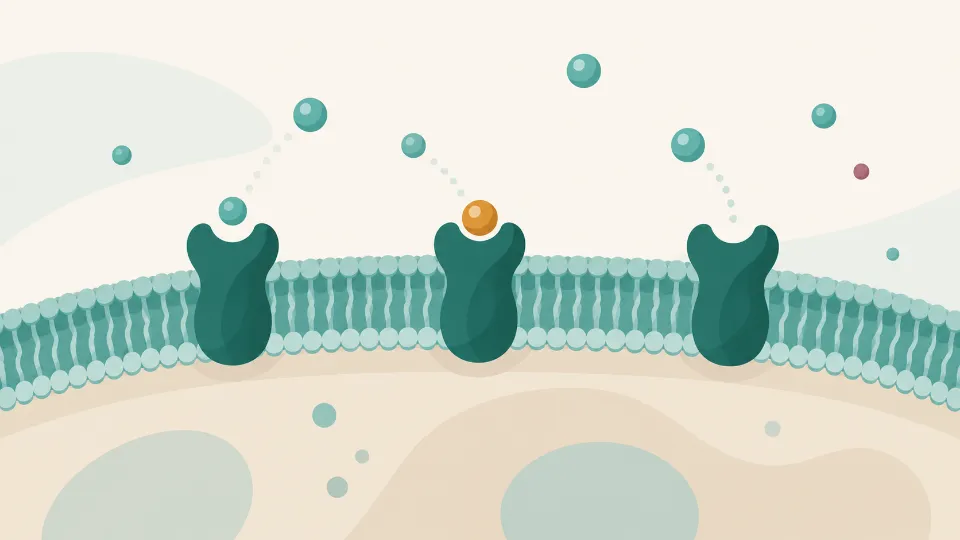
CD19 is a protein on the surface of B cells. Because B cell lymphomas and leukemias carry this protein, they can be recognized by specially designed therapies.
Clinical meaning
CD19 expression is confirmed through pathological examination and is one of the eligibility requirements for anti-CD19 cellular therapy. This examination usually does not stand alone and needs to be read together with other markers.
Testing methods
- Immunohistochemistry (IHC)
A test that uses antibodies to mark specific proteins in tumour tissue.
- Flow cytometry
A test that rapidly measures cell-surface markers across many cells.
- Tumour tissue biopsy
Collection of tumour tissue to confirm the diagnosis and provide material for further testing.
A negative result does not always mean the marker is absent
Test sensitivity differs by sample type and method. Results need to be read together with the pathology report and clinical condition.
What needs verification
- The results of immunohistochemistry or flow cytometry examination stated CD19 positivity.
- Are there any changes in markers after previous therapy, including loss of CD19.
- History of previous anti-CD20 antibody therapy.
- Facility requirements: only facilities with a cellular therapy program can operate.
Related drugs
- Axicabtagene ciloleucel
T cell therapy with chimeric antigen receptor (CAR-T) anti-CD19
- Tisagenlecleucel
Anti-CD19 CAR-T therapy
- Brexucabtagene autoleucel
Anti-CD19 CAR-T therapy
- Tafasitamab
Anti-CD19 antibodies
A link here means the marker is often part of considering a drug category, not a recommendation to use it.
Guides discussing this marker
Written to help prepare questions and documents, not to replace a doctor's assessment.
Clinical trials
Studies mentioning this marker
Filtered from public study descriptions. Access status and site readiness remain unverified.
NCT05633615Phase 2CAR-T cell therapy
Testing Drug Treatments After CAR T-cell Therapy in Patients With Relapsed/Refractory Diffuse Large B-cell Lymphoma
Lymphoma | biomarker: CD19 | CAR-T cell therapy, Immunotherapy, Chemotherapy
United States95 registry sites
Why this appears: Appears because it is recorded for Lymphoma, it mentions marker CD19, the treatment category is CAR-T cell therapy.
What to verify: Acceptance of patients from outside the local country has not been verified.
- Registry
- Recruiting in registry
- Site
- Not verified
- International access
- Unknown
- Patient match
- Not assessed
Last checked 16 Oktober 2026Source ClinicalTrials.govNCT05633615Not verified
NCT06528301Phase 1Combination regimen
A Phase 1 Study of UB-VV111 With and Without Rapamycin in Relapsed/Refractory CD19+ B-cell Malignancies
United States, Australia9 registry sites
Why this appears: Appears because it is recorded for Lymphoma, it mentions marker CD19.
What to verify: Acceptance of patients from outside the local country has not been verified.
- Registry
- Recruiting in registry
- Site
- Not verified
- International access
- Unknown
- Patient match
- Not assessed
Last checked 16 Oktober 2026Source ClinicalTrials.govNCT06528301Not verified
NCT07532525Phase 1CAR-T cell therapy
Pomalidomide After CAR T-cell Therapy for the Treatment of Relapsed or Refractory CD19+ B-cell Leukemia or Lymphoma
Lymphoma | biomarker: CD19 | CAR-T cell therapy
United States1 registry sites
Why this appears: Appears because it is recorded for Lymphoma, it mentions marker CD19, the treatment category is CAR-T cell therapy.
What to verify: Acceptance of patients from outside the local country has not been verified.
- Registry
- Recruiting in registry
- Site
- Not verified
- International access
- Unknown
- Patient match
- Not assessed
Last checked 16 Oktober 2026Source ClinicalTrials.govNCT07532525Not verified
NCT05850234Phase 1 / Phase 2CAR-T cell therapy
AZD0120 in Relapsed/Refractory Multiple Myeloma (DURGA-1)
Multiple Myeloma | biomarker: CD19 | CAR-T cell therapy, Stem cell transplant
United States34 registry sites
Why this appears: Appears because it is recorded for Multiple Myeloma, it mentions marker CD19, the treatment category is CAR-T cell therapy.
What to verify: Acceptance of patients from outside the local country has not been verified.
- Registry
- Recruiting in registry
- Site
- Not verified
- International access
- Unknown
- Patient match
- Not assessed
Last checked 16 Oktober 2026Source ClinicalTrials.govNCT05850234Not verified
NCT07391657Phase 3CAR-T cell therapy
A Study Comparing AZD0120, a Dual-targeted CAR-T Against B-cell Maturation Antigen (BCMA) and CD19, Versus Standard Regimens in Participants With Relapsed Refractory Multiple Myeloma (DURGA-4)
Multiple Myeloma | biomarker: CD19 | CAR-T cell therapy, Immunotherapy, Targeted therapy, Stem cell transplant
United States, Australia, Brazil +12117 registry sites
Why this appears: Appears because it is recorded for Multiple Myeloma, it mentions marker CD19, the treatment category is CAR-T cell therapy.
What to verify: Acceptance of patients from outside the local country has not been verified.
- Registry
- Recruiting in registry
- Site
- Not verified
- International access
- Unknown
- Patient match
- Not assessed
Last checked 16 Oktober 2026Source ClinicalTrials.govNCT07391657Not verified
NCT07620275Phase 1Combination regimen
Safety and Efficacy of KSVCBD Injection in Multiple Myeloma Expressing CD19 and/or BCMA
Multiple Myeloma | biomarker: CD19
China3 registry sites
Why this appears: Appears because it is recorded for Multiple Myeloma, it mentions marker CD19.
What to verify: Acceptance of patients from outside the local country has not been verified.
- Registry
- Recruiting in registry
- Site
- Not verified
- International access
- Unknown
- Patient match
- Not assessed
Last checked 16 Oktober 2026Source ClinicalTrials.govNCT07620275Not verified
Check options based on your result
Share the CD19 result you have so we can explain which categories to discuss with a doctor.
After submission, a human navigator reviews your request and contacts you through your chosen channel. The WhatsApp message already includes this page context, so you do not need to explain from the beginning.
Clinical data is not requested in the form and is not sent to analytics. Do not send medical reports through WhatsApp or email; use the secure upload page. We do not promise eligibility or any treatment outcome.
Next steps
These suggestions come from links between entries in TanyaKanker's database, not from a medical judgement. Each suggestion includes why it appears.
Next to learn
- Leukemia
Cancer type
Reason: Related through a biomarker
- Lymphoma
Cancer type
Reason: Related through a biomarker
- CD19 positive
Molecular alteration
Reason: Related through a biomarker
- CAR-T (chimeric antigen receptor T-cell therapy)
Treatment category
Reason: Related through a biomarker
- Immunotherapy
Treatment category
Reason: Related through a biomarker
- Axicabtagene ciloleucel
Drug
Reason: Targets this marker
To check
- Tumour tissue biopsy
Diagnostic test
Reason: Diperiksa melalui
- Flow cytometry
Diagnostic test
Reason: Diperiksa melalui
- Immunohistochemistry (IHC)
Diagnostic test
Reason: Diperiksa melalui
- Check medical report completeness
Tool
Reason: Prepare documents that still need confirmation
- Prepare questions for your doctor
Tool
Reason: Bring clear questions to the next conversation
What you can do
- Upload medical reports
Build a case summary in twelve steps
Reason: Often the most useful next step after reading this page
- Request a second opinion
Review of the treatment plan
Reason: Relevant when a treatment plan is being considered
- Consult a navigator
A request is recorded with this page context
Reason: For asking the next step directly
Recently updated
- Leukemia
Cancer page
Date: Data revision 2026-09-10
- Brain Cancer
Cancer page
Date: Data revision 2026-09-10
- Pancreatic Cancer
Cancer page
Date: Data revision 2026-09-10
- Testing Osimertinib as a Treatment for Lung Cancers With an EGFR Exon 20 Change
NCT03191149 - Phase 2
Date: Registry update in the last 30 days (2026-10-15)
Want to follow changes on this topic? Save the page or follow the topic so it is easy to find again. View saved items.
Complete pathway
Relapsed DLBCL and CAR-T
DLBCL lymphoma has relapsed or is not responding to initial treatment. When does CAR-T start to be discussed?
- Lymphoma, including DLBCL subtypeDisease overview and the DLBCL subtype discussion within it.
- CD19 markerThe target that makes CAR-T cell therapy relevant in B-cell lymphoma.
- CD19 positiveCD19 expression on lymphoma cells, assessed before CAR-T is discussed.
- PET-CTImaging commonly requested to assess relapse and treatment response.
- CAR-T therapyHow cell therapy works, the side effects watched for, and where it is delivered.
- Relapsed DLBCL and CAR-T guideWhen CAR-T is discussed, who decides eligibility, and which records to prepare.
A structured summary so treatment-line history and imaging are readable.
Prepare for your next consultation
Use the free six-question tool to prepare questions for your doctor.